Our Blog


Invisalign® Q&A

September 23rd, 2020
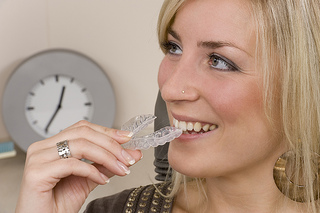
It’s estimated that up to four million people at any one time are wearing braces in the United States and Canada. But John Pappas and our team at Masterpiece Dentistry at Copley know that braces have come a long way from the early days of orthodontics, so much so that these days, options are available that are not visible to onlookers. The most popular of these “invisible” braces is Invisalign. Here’s a list of FAQs regarding Invisalign:

Are they really invisible?

Yes, the clear liners are virtually invisible, so they enable patients to feel good about themselves and their appearance, while getting the orthodontic treatment they need.

Are there wires, rubber bands, and brackets with Invisalign?

Nope. Invisalign is truly an alternative to conventional braces. The treatment consists of clear liners that can easily be removed and cleaned throughout the day. There are no wires, so there’s less poking and mouth irritation compared to braces. There’s also no wire tightening at adjustment appointments, so patients don’t have to worry about a sore mouth in the days that follow in-office visits.

I’ve heard that if I get braces, I won’t be able to eat certain foods like popcorn and hard candy. Is this true with Invisalign too?

No. With Invisalign, there are no food restrictions. You simply remove your aligners when you’re eating, and replace them after you’ve finished and brushed any leftover food particles away.

Does Invisalign cost more than braces?

While overall cost varies on a patient-by-patient basis and is based largely on the level of treatment, Invisalign costs about the same as traditional braces, which makes this treatment option a truly affordable alternative.

How does brushing compare with conventional braces?

Brushing your teeth while wearing conventional braces takes some getting used to. Patients have to brush around the metal brackets and floss with a specialty tool to get into the hard-to-reach areas of the mouth. By contrast, Invisalign can be removed at any time to permit regular brushing and flossing.

Every patient is different and Invisalign might not be the best course of orthodontic treatment for everyone, but it's an option that's gaining more and more popularity, and it's an orthodontic alternative that doesn't sacrifice comfort and convenience for results. For more information, or to schedule a consultation, please give us a call at our convenient Boston, Massachusetts office!


The History of Dental Implants

September 16th, 2020

The earliest endeavors for dental implant tooth substitutes on record dates back to the Mayan civilization, to 600 AD. Archeologists recovered primeval skulls in which the teeth had been replaced with materials the ranged from wood, stones, and jewels to small pieces of seashells.

Like most scientific progresses, the finding of what makes todays dental implants so successful was unexpected. In 1952, a Swedish orthopedic surgeon, named Dr. Branemark, placed a very small titanium cylinder into a bone to learn how the bone would heal. What he discovered was that the titanium cylinder had fused (melded to the bone.) Out of this experiment dental implants would be born within two decades.

In 1970s, modern dental implants made their first appearance. Of course, over the past four decades, the original dental implant has undergone several improvements in both structure and design, but has always been based on the original theme.

Dental implants were first made available to individuals who had lost all of their teeth and had difficulty wearing dentures, mainly because they had lost of much of their jawbone were dentures set. Today, most dental implants are used in place of dentures, for multiple teeth that are missing, or to replace a single tooth.

When dental implants were first designed, they were a one size fits all. The original dental implants were all the same circumference, while the length of each tooth varied depending on the type of tooth it was replacing. The dental implants were smoothed out and polished by a machine, but still did not produce the natural looking dental implants we have today.

Now, with the help of state-of-the-art equipment and advanced technology, implants come in a wide variety of sizes and shape to match the teeth that are missing. The surfaces of today’s dental implants give them a more natural look and feel. In addition, the surface of the dental implant also attaches to the bone much easier and for a longer period of time.

Dr. Branemark's discovery has left an impression on dental professionals, all over the world, including John Pappas. If you are considering dental implants to improve your smile’s health, beauty, and function, be sure to contact our Boston, Massachusetts office to schedule an appointment.

What can I expect during my implant procedure?

September 9th, 2020

Dental implants are a surgical procedure done by John Pappas right here at our Boston, Massachusetts office. Screw-like parts made of titanium are inserted into your jaw bone and act as the root of your tooth. An artificial tooth will be placed on top of the screw, usually made out of ceramic or layered porcelain. The dental implant will look and feel just like the natural tooth you lost.

How much time will the dental implant surgery take?

There are numerous factors that determine the length of time for the dental implant procedure:

  • If you’re having one tooth replaced or several
  • The teeth that are being replaced
  • If you need a tooth or teeth extracted before the implant placement
  • The amount of time it takes for your IV to be placed
  • Any last minute questions or concerns you may need addressed

All of the above factors will also govern the amount of visits to our Boston, Massachusetts office you will need to make throughout your dental implant treatment period. For example, a single tooth dental implant surgery typically takes one to two hours from the time you arrive until you awaken from the anesthesia. This also includes the amount of time it takes to put on your gown, hair cap, and other surgical dressing preparations before you are able to enter the sterile surgical environment.

Does getting an implant hurt?

With nearly any surgical procedure, you will feel some sort of discomfort. Whether it is the insertion of the IV for the anesthesia, or discomfort you may feel after the surgery. However, most patients report that their pain was tolerable after their dental implant surgery. In fact, the majority of patients said the discomfort was a lot less than they expected. John Pappas will prescribe pain medications to help with any discomfort you may experience once you get home.

How will I feel after the dental implant treatment?

It is normal to have some bruising and swelling in the soft tissue and gum area. Usually the pain or discomfort does not require the use of anything more than an over-the-counter pain medication such as Tylenol or ibuprofen. In addition, you will have the prescription for a stronger pain medication if you need it. You should be able to work the following day.

Does the placement of implants hurt?

August 26th, 2020

If you're scheduled to get a dental implant, it's only natural to have questions about it. The pain involved is usually on the mind of most patients. Of course, some discomfort is possible, as with any major dental procedure. Having a well-defined plan ahead of time, which is carried out by John Pappas, reduces the risk of complications or side effects post-surgery.

During the procedure you won't feel a thing, since it is performed under general or local anesthesia that totally numbs your mouth. It's more likely that you will feel some pain or discomfort after the anesthesia has worn off.

There are usually three things that will affect the length and intensity of any discomfort:

  • The complexity of your surgery (for example if you need a bone graft or sinus lift beforehand)
  • How well-trained the dental team which works on your case is (it may be multiple people, including a periodontist, oral surgeon, and/or general dentist)
  • How quickly your body is able to heal itself post-surgery

The pain experienced from an untreated case will usually far outweigh that experienced from a dental implant. Good oral hygiene after your surgery is important to avoid infection. Salt water rinses are generally recommended 24 hours after your surgery. Brush your teeth gently around the implant.

It's also a good idea not to eat any food that is too hot, cold, or hard. Soft or pureed foods will help you to avoid chewing for the first few days after surgery and will help your mouth to heal faster. You'll typically be prescribed pain medication, but some patients find that ibuprofen or acetaminophen work well enough. Just remember, the most severe discomfort is usually experienced within the six hours after your anesthesia wears off.

Getting a dental implant is a big decision, and we want to make sure you get through it easily. Our Boston, Massachusetts team is here to help if you have any questions about the procedure or post-surgery care.

Back to Top