Our Blog


Implants: Why It’s Important to Replace Missing Teeth

October 21st, 2020

Sometimes, despite our best care, we lose a tooth. If it is a front tooth, it will probably be a high priority to replace. But if a missing tooth doesn’t show when we smile, what’s the hurry? Let’s look at the reasons why prompt replacement with an implant is always a good idea, no matter which tooth is involved.

Appearance

Implants look like natural, individual teeth, but that is not the only aesthetic reason to replace a lost tooth. Without some type of tooth replacement, missing teeth can eventually affect the structure of our jawbones and change our facial appearance. Cheeks, lips, profiles—all are impacted by the changes in our bones resulting from tooth loss.

Better Bite

Nature abhors a vacuum, and so do our teeth. When a space is left by a missing tooth, the teeth around it might shift positions, affecting the even pattern of our bite. And without a tooth to keep it in place, a tooth above or below the missing one might begin to grow longer to fill the void in your bite. This lengthening, in turn, can cause even more bite problems.

Chewing

With the loss of only a single tooth, there is a negative impact on the remaining teeth. More pressure is placed on the other teeth in order to chew properly, front teeth not meant for chewing might need to be used for that purpose, or food is not chewed as thoroughly as it should be. The first two problems are not healthy for our teeth, and the last one is not healthy for digestion!

Don’t Delay

Changes in bite and chewing problems probably won’t happen overnight, so is putting off the process really a big deal? It can be! Time is not on our side when a tooth is lost. The bone tissue which supports our teeth needs the stimulation of biting and chewing to stay healthy. Without that stimulation, the bone area under the missing tooth gradually shrinks. If there is not enough bone area left, you might need surgical bone grafting to achieve the right bone height to hold an implant, or it could lead to the impossibility of placing an implant at all.

Expense

Replacing a lost tooth quickly requires less restoration of the gums and bone in the future and prevents other serious problems from developing.

We could continue through the alphabet, but instead, come talk to John Pappas about all the reasons a tooth implant might be your best option. Whether you have already lost a tooth, or if you have an extraction scheduled at our Boston, Massachusetts office, we are happy to recommend the best procedure at just the right time to make your smile beautiful, healthy, and complete!


Can my child really avoid tooth decay?

October 14th, 2020

Great question! Yes, in fact, tooth decay is preventable! Decay, which is caused by sugars left in your child’s mouth, can turn into an acid, which in turn can break down his or her teeth. Children are at high risk for tooth decay for a simple reason: many children and adolescents tend to be lax in their oral hygiene habits.

So, how can your child prevent tooth decay?

  • Start early. After the age of two, brush your child’s teeth with fluoride toothpaste twice a day. And, if possible, clean between the teeth with dental floss at least once a day, preferably before they go to bed.
  • Don’t allow your little ones to eat after cleaning teeth at bedtime, as salivary flow decreases while they sleep and their teeth become vulnerable to cavities.
  • Do not allow your little ones to nibble food or sip drinks continuously, and keep in mind that a low-sugar diet also helps keep tooth decay at bay. Allow time between meals for saliva to neutralize acids and repair the teeth.
  • Drinking water frequently throughout the day can also reduce the possibility of new cavities forming.
  • Dental sealants can also protect your children’s teeth from cavities. Sealants, which are applied to the chewing surfaces of molars, act as a shield between the tooth and harmful bacteria.

Finally, make sure your child visits Masterpiece Dentistry at Copley approximately every six months for a checkup and routine cleaning! Please give us a call at our Boston, Massachusetts office.

Can my body reject my dental implant?

September 30th, 2020

According to the International Congress of Oral Implantologists it is rare that your body will reject your dental implants. However, this does not mean that your dental implant will not fail. A successful dental implant is one that is placed in healthy bone and is properly cared for after the surgery takes place.

There is only one major reason why a dental implant would be rejected: a titanium allergy. The majority of dental implants are made with titanium because it has proven to be the most biologically compatible of all metals. On average, less than one percent of potential dental implant recipients reported an allergy to titanium.

Dental Implant Failure

The most common cause of dental implant failure in the upper and lower jaw is bacteria. Everyone has bacteria in their mouth. If you have bacteria in your jawbone at the time of your dental implant, it can spread from implant to implant, causing dental implant failure.

If you do not take proper care of your dental implants, that could also cause them to fail. You also have to take proper care of the implant and keep your mouth clean. The development of excessive bacteria around the implant and in surrounding tissues can lead to implant failure.

Teeth grinding is another reason dental implants fail. When you grind your teeth, it can move the implants out of position. Therefore, you should wear a mouthpiece when you go to sleep if you know you grind or clench.

If you take care of your implants by practicing good oral hygiene and visit our Boston, Massachusetts office, you should not have any problems with your new dental implants. As always, ask John Pappas about any questions or concerns you have about you dental implants.

Invisalign® Q&A

September 23rd, 2020

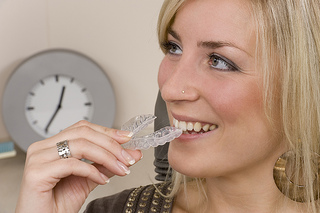
It’s estimated that up to four million people at any one time are wearing braces in the United States and Canada. But John Pappas and our team at Masterpiece Dentistry at Copley know that braces have come a long way from the early days of orthodontics, so much so that these days, options are available that are not visible to onlookers. The most popular of these “invisible” braces is Invisalign. Here’s a list of FAQs regarding Invisalign:

Are they really invisible?

Yes, the clear liners are virtually invisible, so they enable patients to feel good about themselves and their appearance, while getting the orthodontic treatment they need.

Are there wires, rubber bands, and brackets with Invisalign?

Nope. Invisalign is truly an alternative to conventional braces. The treatment consists of clear liners that can easily be removed and cleaned throughout the day. There are no wires, so there’s less poking and mouth irritation compared to braces. There’s also no wire tightening at adjustment appointments, so patients don’t have to worry about a sore mouth in the days that follow in-office visits.

I’ve heard that if I get braces, I won’t be able to eat certain foods like popcorn and hard candy. Is this true with Invisalign too?

No. With Invisalign, there are no food restrictions. You simply remove your aligners when you’re eating, and replace them after you’ve finished and brushed any leftover food particles away.

Does Invisalign cost more than braces?

While overall cost varies on a patient-by-patient basis and is based largely on the level of treatment, Invisalign costs about the same as traditional braces, which makes this treatment option a truly affordable alternative.

How does brushing compare with conventional braces?

Brushing your teeth while wearing conventional braces takes some getting used to. Patients have to brush around the metal brackets and floss with a specialty tool to get into the hard-to-reach areas of the mouth. By contrast, Invisalign can be removed at any time to permit regular brushing and flossing.

Every patient is different and Invisalign might not be the best course of orthodontic treatment for everyone, but it's an option that's gaining more and more popularity, and it's an orthodontic alternative that doesn't sacrifice comfort and convenience for results. For more information, or to schedule a consultation, please give us a call at our convenient Boston, Massachusetts office!

Back to Top